
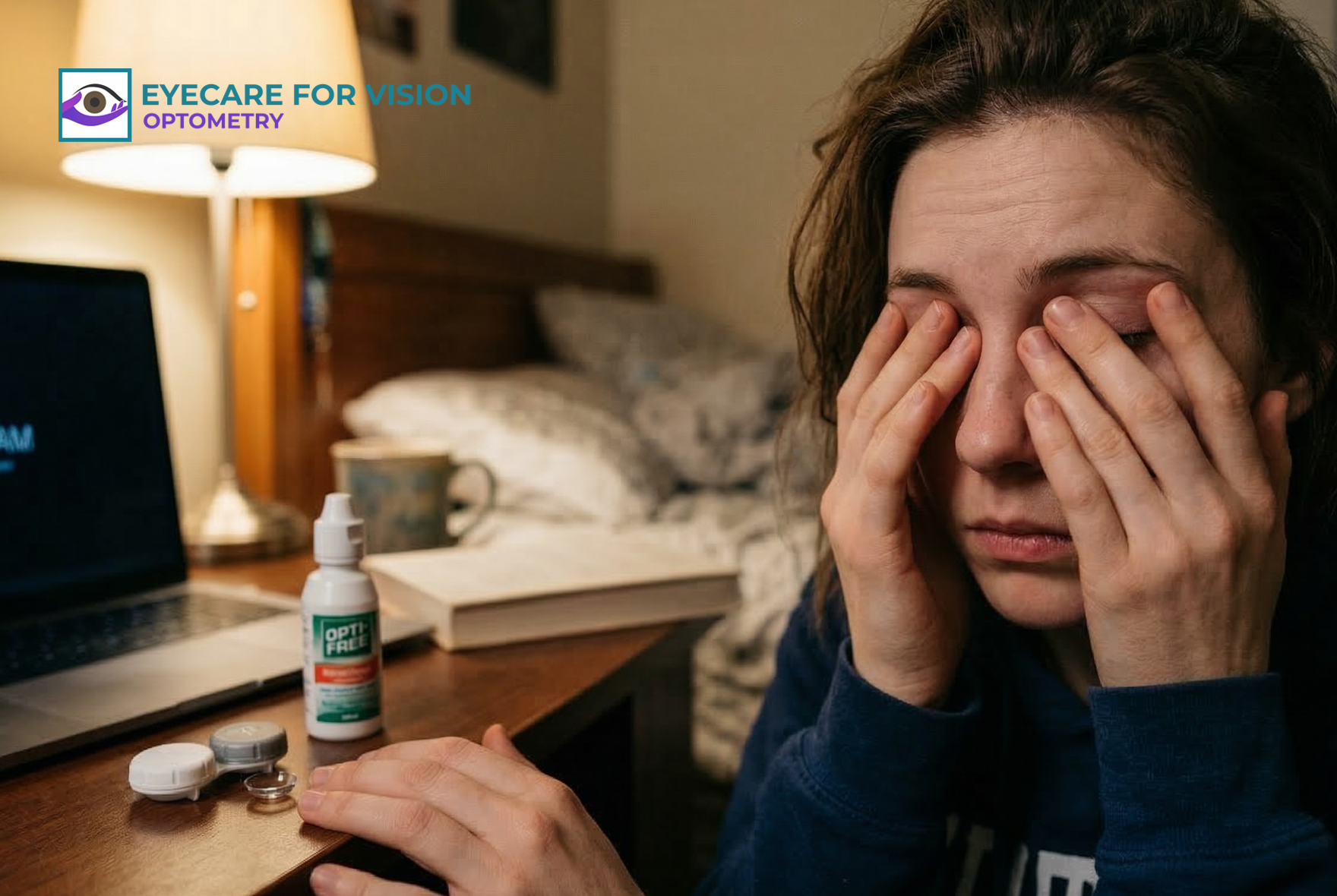
Why Do My Eyes Hurt When I Wear Contact Lenses Too Long?
TLDR
Wearing contact lenses too long can cause eye discomfort and irritation.
Symptoms may include dryness, redness, blurred vision, and light sensitivity.
Contact lenses can reduce oxygen reaching the cornea if worn longer than recommended.
Removing lenses and giving the eyes time to recover often improves symptoms.
Proper hygiene and following wear schedules help prevent complications.
If pain, redness, or vision changes persist, seek professional eye care.
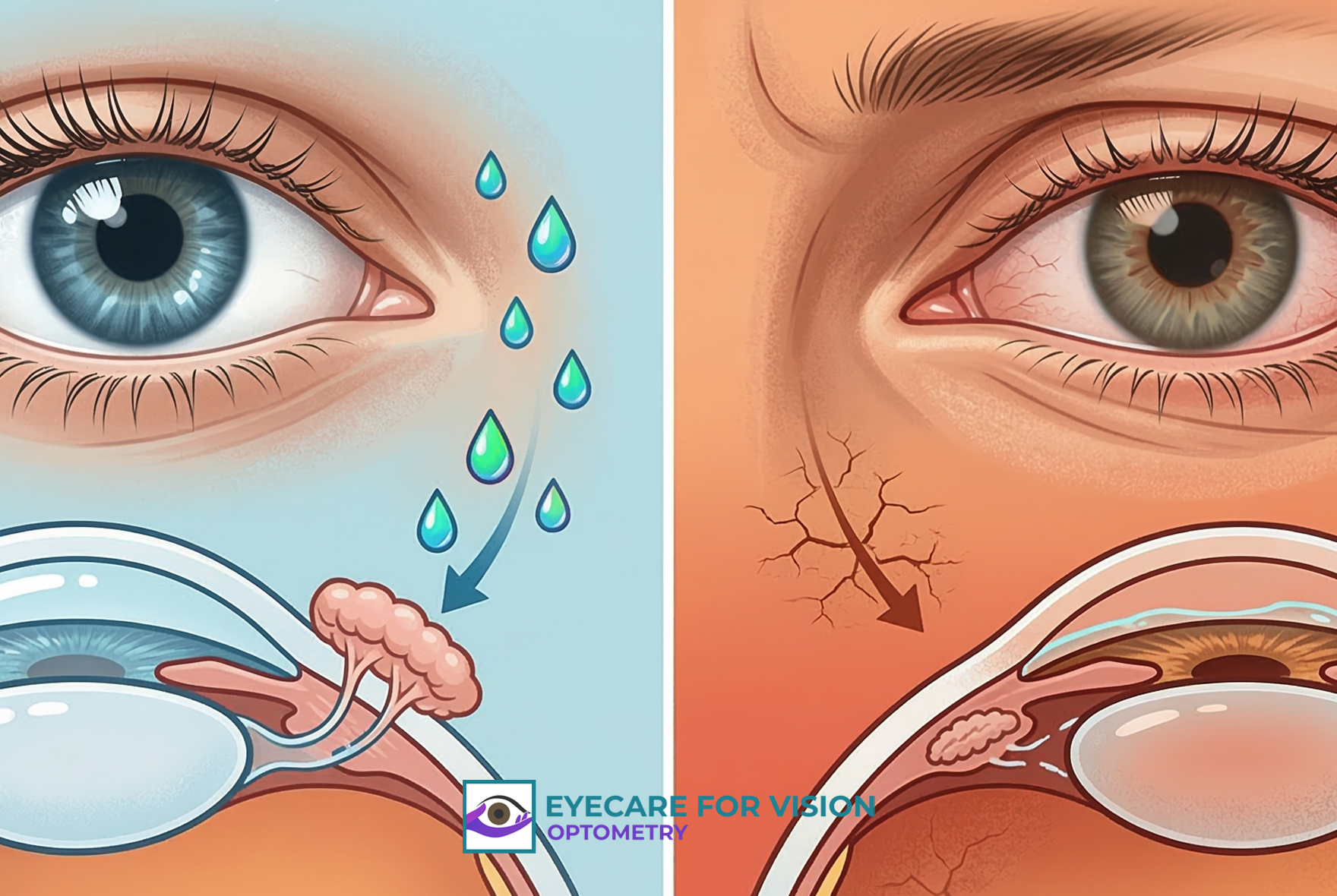
How Does Dehydration Impact Tear Production and Eye Comfort?
TLDR
• Dehydration can reduce tear production, leading to dry eyes.
• Dry eyes cause discomfort and increase the risk of eye infections.
• Stay hydrated and consider artificial tears for relief.
• See an optometrist for persistent dryness and irritation.
How Does Sleep Apnea Affect the Eyes?
TLDR
Sleep apnea can significantly impact eye health and vision.
Conditions such as glaucoma and dry eye syndrome are associated with sleep apnea.
Regular eye exams are essential for early detection and management.
Consult an optometrist for personalized care and treatment.

How Does Dehydration Affect the Eyes and Vision?
TLDR
Dehydration can lead to dry eyes, blurred vision, and eye strain.
Essential to maintain proper hydration for eye health.
Consult your healthcare provider for persistent symptoms.
Treatment includes artificial tears and lifestyle changes.
Prevention tips focus on adequate fluid intake and eye care.
Recent studies show a link between dehydration and vision issues.

Why Does My Close-Up Vision Get Worse as I Get Older?
TLDR
Aging affects close-up vision due to presbyopia, a natural condition where the eye's lens stiffens.
Symptoms include difficulty focusing on close objects, eye strain, and headaches.
Treatment options include reading glasses, bifocals, and contact lenses, each with pros and cons.
Prevention includes regular eye exams and eye health maintenance.
Consult your healthcare provider if you notice changes in vision.

Are Floaters Always Harmless, or Can They Mean Something Serious?
TLDR
Eye floaters are small moving spots that appear in your field of vision.
They are often harmless but can indicate serious conditions.
Common causes include aging and vitreous detachment.
Urgent symptoms necessitate a comprehensive eye exam in Rancho Bernardo.
Treatment varies; surgery is rare and reserved for severe cases.
Recent studies show that sudden increases in floaters should be evaluated promptly.
Consult your healthcare provider for personalized advice.

Why Do My Eyes Feel Tired or Strained After Reading or Using Screens?
TLDR
Eye strain from screens and reading is common due to prolonged focus.
Symptoms include headaches, dry eyes, and blurred vision.
Treatments involve proper eyewear, screen breaks, and eye exercises.
Prevention tips: Maintain proper lighting and practice the 20-20-20 rule.
Recent studies highlight increased screen time's impact on eye health.
Consult your healthcare provider for personalized advice.

How Do Eye Exams Help Detect Neurological Disorders Like Multiple Sclerosis or Optic Neuritis?
TLDR
Eye exams can detect neurological disorders like multiple sclerosis and optic neuritis.
Comprehensive eye exams assess visual acuity, eye health, and potential neurological issues.
Symptoms may include vision loss, eye pain, and color vision changes.
Treatment options vary and can include medication and lifestyle changes.
Recent studies highlight the importance of early detection through eye exams.
Schedule a comprehensive eye exam in Rancho Bernardo to monitor your eye and neurological health.

How Does High Cholesterol Show Up in the Eyes?
TLDR
High cholesterol can manifest in the eyes through conditions like xanthelasma and corneal arcus.
Regular comprehensive eye exams can help detect these signs early.
Treatment involves managing cholesterol levels and addressing eye-specific conditions.
Lifestyle changes such as diet and exercise are crucial for prevention.
Consult a trusted optometrist in Rancho Bernardo for personalized care.

What Does Dilated Pupil Screening Test For, and Why Is It Necessary?
TLDR
Dilated pupil screening is crucial for comprehensive eye exams.
It helps detect conditions like glaucoma, diabetic retinopathy, and macular degeneration.
Essential for managing pediatric myopia and dry eyes.
Consult your healthcare provider for personalized advice.
Regular screenings recommended for early detection and treatment.
Schedule an appointment with EyeCare For Vision Optometry for expert care.