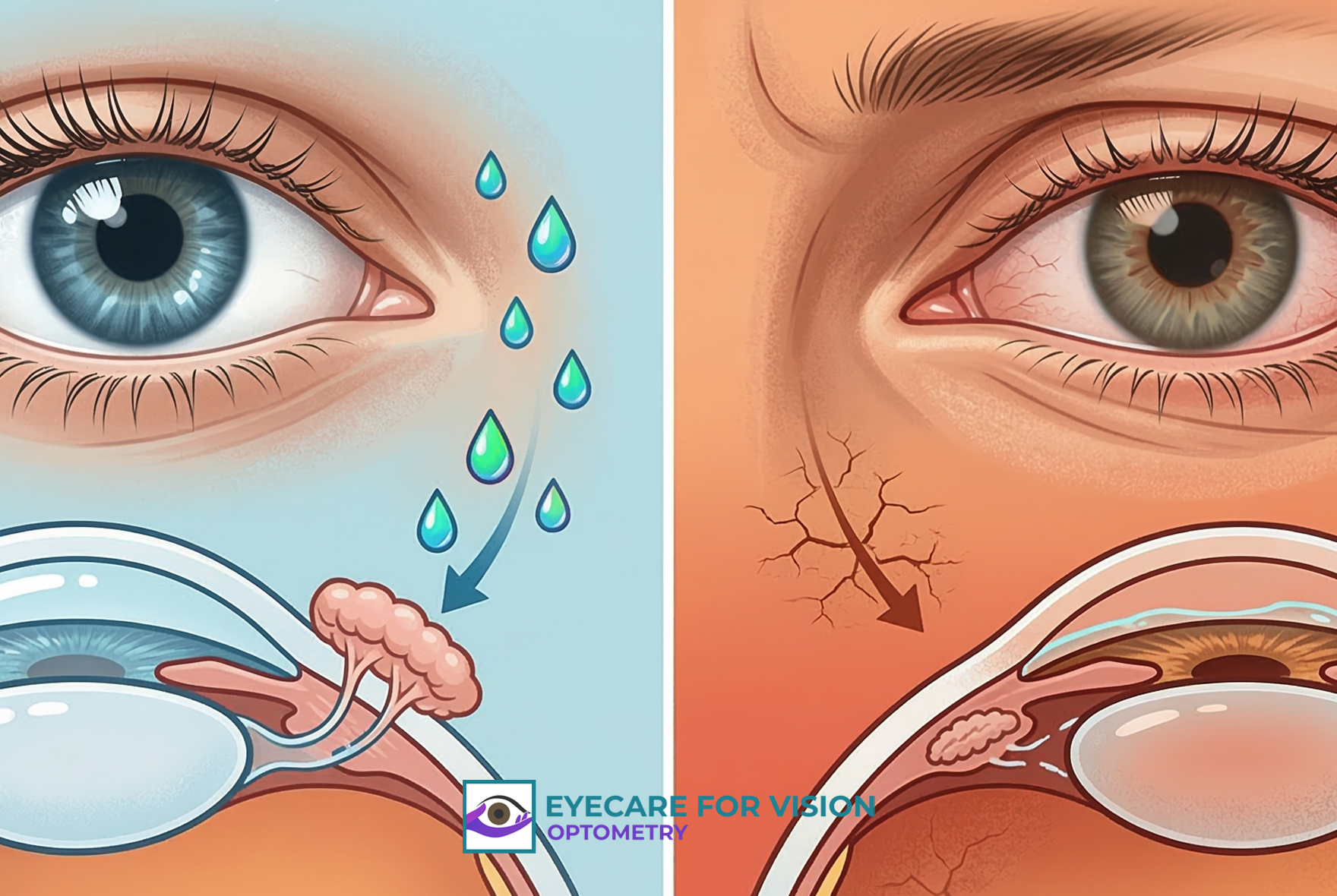
How Does Dehydration Impact Tear Production and Eye Comfort?
TLDR
• Dehydration can reduce tear production, leading to dry eyes.
• Dry eyes cause discomfort and increase the risk of eye infections.
• Stay hydrated and consider artificial tears for relief.
• See an optometrist for persistent dryness and irritation.

Can Hormonal Changes (Like Menopause) Affect My Eyes?
TLDR
Hormonal changes during menopause can significantly impact eye health.
Common symptoms include dry eyes, blurry vision, and increased risk of glaucoma.
Treatments vary from artificial tears to prescription medications.
Regular eye exams and lifestyle adjustments can help manage symptoms.
Recent studies highlight increasing prevalence of eye issues in menopausal women.
Consult your healthcare provider for personalized advice and treatment.

How Does Dehydration Affect the Eyes and Vision?
TLDR
Dehydration can lead to dry eyes, blurred vision, and eye strain.
Essential to maintain proper hydration for eye health.
Consult your healthcare provider for persistent symptoms.
Treatment includes artificial tears and lifestyle changes.
Prevention tips focus on adequate fluid intake and eye care.
Recent studies show a link between dehydration and vision issues.

Why Does My Close-Up Vision Get Worse as I Get Older?
TLDR
Aging affects close-up vision due to presbyopia, a natural condition where the eye's lens stiffens.
Symptoms include difficulty focusing on close objects, eye strain, and headaches.
Treatment options include reading glasses, bifocals, and contact lenses, each with pros and cons.
Prevention includes regular eye exams and eye health maintenance.
Consult your healthcare provider if you notice changes in vision.

Can Glaucoma Develop Even If I Have Normal Eye Pressure?
TLDR
Glaucoma can develop even with normal eye pressure, known as normal-tension glaucoma.
Comprehensive eye exams are crucial for early detection.
Symptoms may be subtle or nonexistent until advanced stages.
Treatment options include medications, laser therapy, and surgery.
Prevention tips involve regular eye exams and a healthy lifestyle.
Consult your healthcare provider for personalized advice.

Why Do I Sometimes See Halos or Glare Around Lights at Night?
TLDR
Seeing halos or glare around lights at night is a common visual disturbance.
It can be caused by conditions such as cataracts, glaucoma, and dry eyes.
Treatment varies based on the underlying cause and can include prescription glasses, eye drops, or surgery.
Regular comprehensive eye exams in Rancho Bernardo can help detect underlying issues early.
Consult your healthcare provider if symptoms persist or worsen.
EyeCare For Vision Optometry offers personalized care for vision concerns.

Why Do My Eyes Feel Tired or Strained After Reading or Using Screens?
TLDR
Eye strain from screens and reading is common due to prolonged focus.
Symptoms include headaches, dry eyes, and blurred vision.
Treatments involve proper eyewear, screen breaks, and eye exercises.
Prevention tips: Maintain proper lighting and practice the 20-20-20 rule.
Recent studies highlight increased screen time's impact on eye health.
Consult your healthcare provider for personalized advice.

Are There Vitamins or Supplements That Really Help My Vision?
TLDR
• Certain vitamins and supplements may support eye health.
• Key nutrients include Vitamin A, Vitamin C, Vitamin E, Zinc, and Omega-3 fatty acids.
• Conditions like Age-related Macular Degeneration (AMD) may benefit from specific supplements.
• Consult your healthcare provider before starting any supplement regimen.
• Comprehensive eye exams are crucial for early detection of eye conditions.

Can Thyroid Disease Affect Vision, and What Are the Warning Signs?
TLDR
Thyroid disease can significantly impact vision and eye health.
Common symptoms include bulging eyes, double vision, and dry eyes.
Treatment options vary from medication to surgery, each with its pros and cons.
Regular eye exams are crucial for early detection and management.
Lifestyle changes can help mitigate symptoms.
Consult your healthcare provider for personalized advice.

What Systemic Diseases Can a Comprehensive Eye Exam Detect?
TLDR
A comprehensive eye exam can detect systemic diseases such as diabetes, hypertension, autoimmune disorders, and high cholesterol.
Diabetes-related changes in the retina can be identified early, helping prevent severe vision loss.
Hypertension can be detected through changes in the blood vessels of the eye.
Autoimmune disorders may first show symptoms in the eyes, including dryness and sensitivity to light.
High cholesterol can present as deposits on the eyelids or corneal rings.
Latest research suggests potential links between retinal changes and early signs of Alzheimer’s.
Regular exams are critical for prevention, early detection, and long-term health monitoring.