
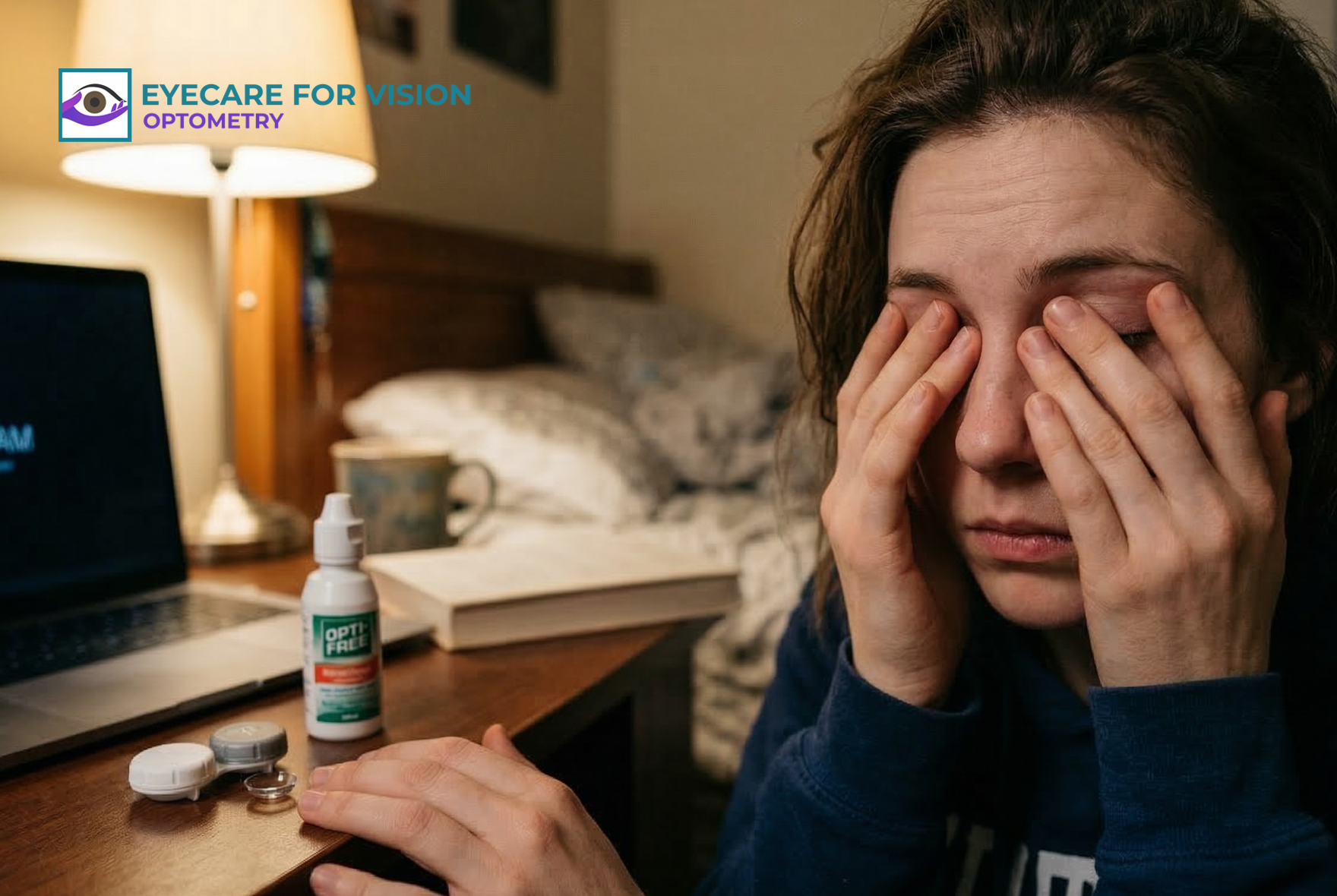
Why Do My Eyes Hurt When I Wear Contact Lenses Too Long?
TLDR
Wearing contact lenses too long can cause eye discomfort and irritation.
Symptoms may include dryness, redness, blurred vision, and light sensitivity.
Contact lenses can reduce oxygen reaching the cornea if worn longer than recommended.
Removing lenses and giving the eyes time to recover often improves symptoms.
Proper hygiene and following wear schedules help prevent complications.
If pain, redness, or vision changes persist, seek professional eye care.

Can Autoimmune Diseases Like Lupus or Rheumatoid Arthritis Damage Vision?
TLDR
Autoimmune diseases can affect eye health and vision.
Common symptoms include dry eyes, pain, and blurred vision.
Management requires personalized care and regular eye exams.
Early detection is crucial to prevent long-term vision damage.

Can Head Injuries or Concussions Affect Vision Long-Term?
TLDR
Head injuries can impact vision and may lead to long-term symptoms.
Common symptoms include blurred vision, double vision, and light sensitivity.
Professional treatment helps manage symptoms and prevent complications.
Early consultation with a healthcare provider is essential for proper management.

What is optic neuritis, and how is it connected to neurological conditions?
TLDR
Optic neuritis is inflammation of the optic nerve affecting vision.
It can be linked to neurological conditions such as multiple sclerosis.
Symptoms include vision loss, pain, and color vision changes.
Early diagnosis and treatment are key to managing symptoms and underlying causes.

How Does Dehydration Affect the Eyes and Vision?
TLDR
Dehydration can lead to dry eyes, blurred vision, and eye strain.
Essential to maintain proper hydration for eye health.
Consult your healthcare provider for persistent symptoms.
Treatment includes artificial tears and lifestyle changes.
Prevention tips focus on adequate fluid intake and eye care.
Recent studies show a link between dehydration and vision issues.

How Does Nutrition Affect My Eye Health?
TLDR
Nutrition plays a crucial role in maintaining eye health and preventing diseases.
Key nutrients include vitamins A, C, and E, omega-3 fatty acids, and zinc.
Conditions such as macular degeneration, cataracts, and dry eye can be influenced by diet.
Regular comprehensive eye exams are essential for early detection of eye issues.
Consult your healthcare provider to tailor a diet suitable for your eye health needs.

Is it Safe to Wear Contact Lenses Every Day?
TLDR
Contact lenses offer convenience and improved vision.
Daily wear is generally safe with proper hygiene and care.
Consult your healthcare provider to determine the best type for you.
Regular eye exams are essential for maintaining eye health.
Warnings include risks of infection and dry eyes.

At What Age Should My Child Have Their First Comprehensive Eye Exam?
TLDR
First Eye Exam: Recommended at 6 months old, then at age 3, before starting school, and annually thereafter.
Importance: Early detection of issues like amblyopia, strabismus, and refractive errors.
Symptoms to Watch: Squinting, eye rubbing, sitting close to screens, poor hand-eye coordination.
Treatment Options: Glasses, vision therapy, and sometimes surgery.
Prevention: Regular eye exams, protective eyewear, limited screen time.
Consultation: Always consult your healthcare provider for personalized advice.

What Does Dilated Pupil Screening Test For, and Why Is It Necessary?
TLDR
Dilated pupil screening is crucial for comprehensive eye exams.
It helps detect conditions like glaucoma, diabetic retinopathy, and macular degeneration.
Essential for managing pediatric myopia and dry eyes.
Consult your healthcare provider for personalized advice.
Regular screenings recommended for early detection and treatment.
Schedule an appointment with EyeCare For Vision Optometry for expert care.