
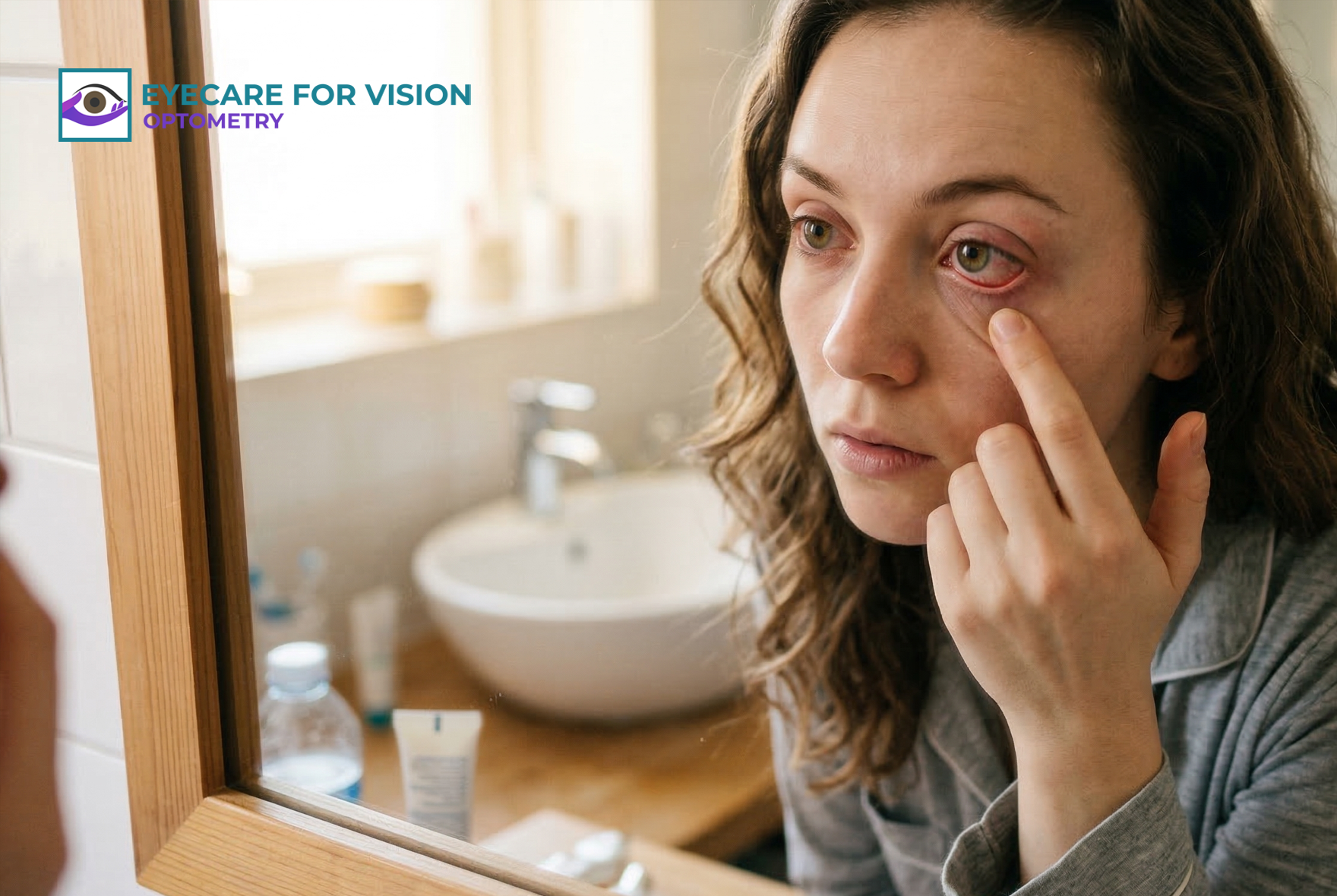
Why Are My Eyes Red in the Morning?
TLDR
Red eyes in the morning are common and often linked to dryness, allergies, or irritation.
Poor sleep, environmental factors, and eyelid inflammation can contribute to redness.
Symptoms may include dryness, itching, burning, or watery eyes.
Proper eye hygiene, improved sleep habits, and managing allergens can reduce redness.
Persistent redness or vision changes should be evaluated by an eye professional.
Regular Comprehensive Eye Exams help identify underlying causes and maintain eye health.
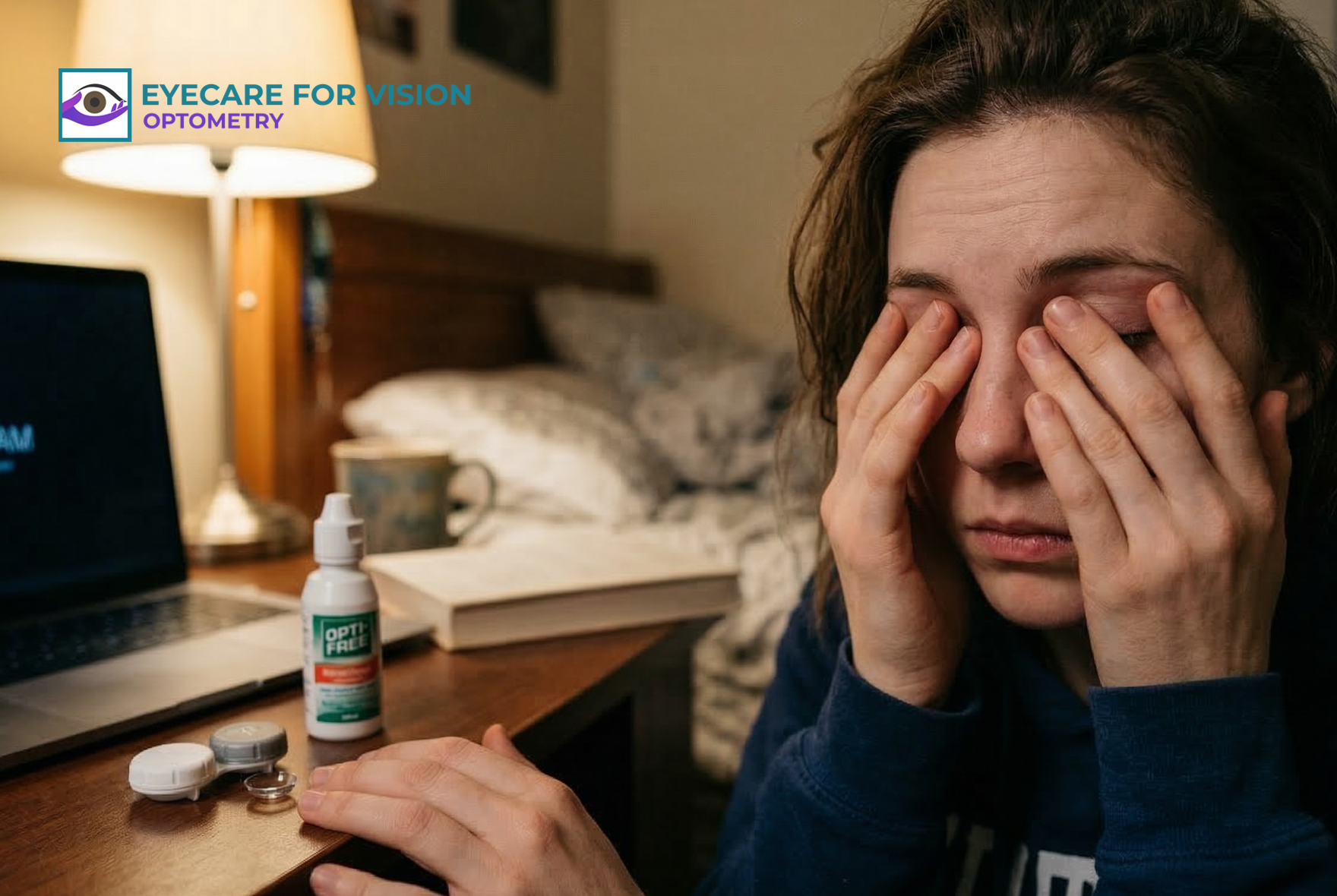
Why Do My Eyes Hurt When I Wear Contact Lenses Too Long?
TLDR
Wearing contact lenses too long can cause eye discomfort and irritation.
Symptoms may include dryness, redness, blurred vision, and light sensitivity.
Contact lenses can reduce oxygen reaching the cornea if worn longer than recommended.
Removing lenses and giving the eyes time to recover often improves symptoms.
Proper hygiene and following wear schedules help prevent complications.
If pain, redness, or vision changes persist, seek professional eye care.
Is it Normal to Have Different Prescriptions in Each Eye?
TLDR
• Having different prescriptions in each eye is common and usually normal.
• Causes include astigmatism, myopia, hyperopia, and eye health conditions.
• Regular eye exams can help monitor and adjust prescriptions as needed.
• Consult an optometrist if you notice vision changes or discomfort.
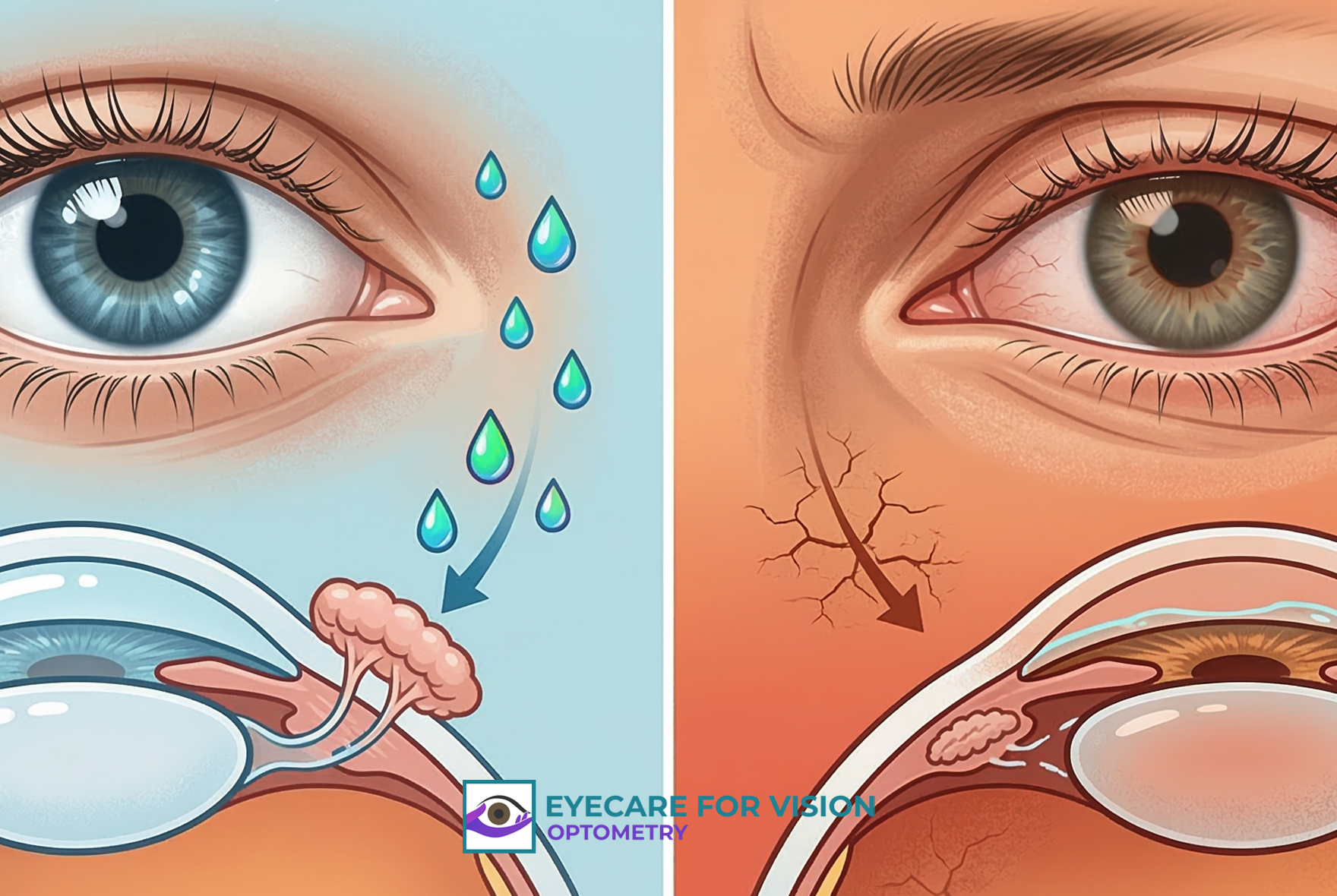
How Does Dehydration Impact Tear Production and Eye Comfort?
TLDR
• Dehydration can reduce tear production, leading to dry eyes.
• Dry eyes cause discomfort and increase the risk of eye infections.
• Stay hydrated and consider artificial tears for relief.
• See an optometrist for persistent dryness and irritation.

Why Do Some Medications Cause Dry Eyes or Blurred Vision?
TLDR
Some medications can contribute to dry eyes and blurred vision.
Dry eyes may cause discomfort and irritation.
Blurred vision can interfere with daily activities.
Professional evaluation helps identify causes and solutions.
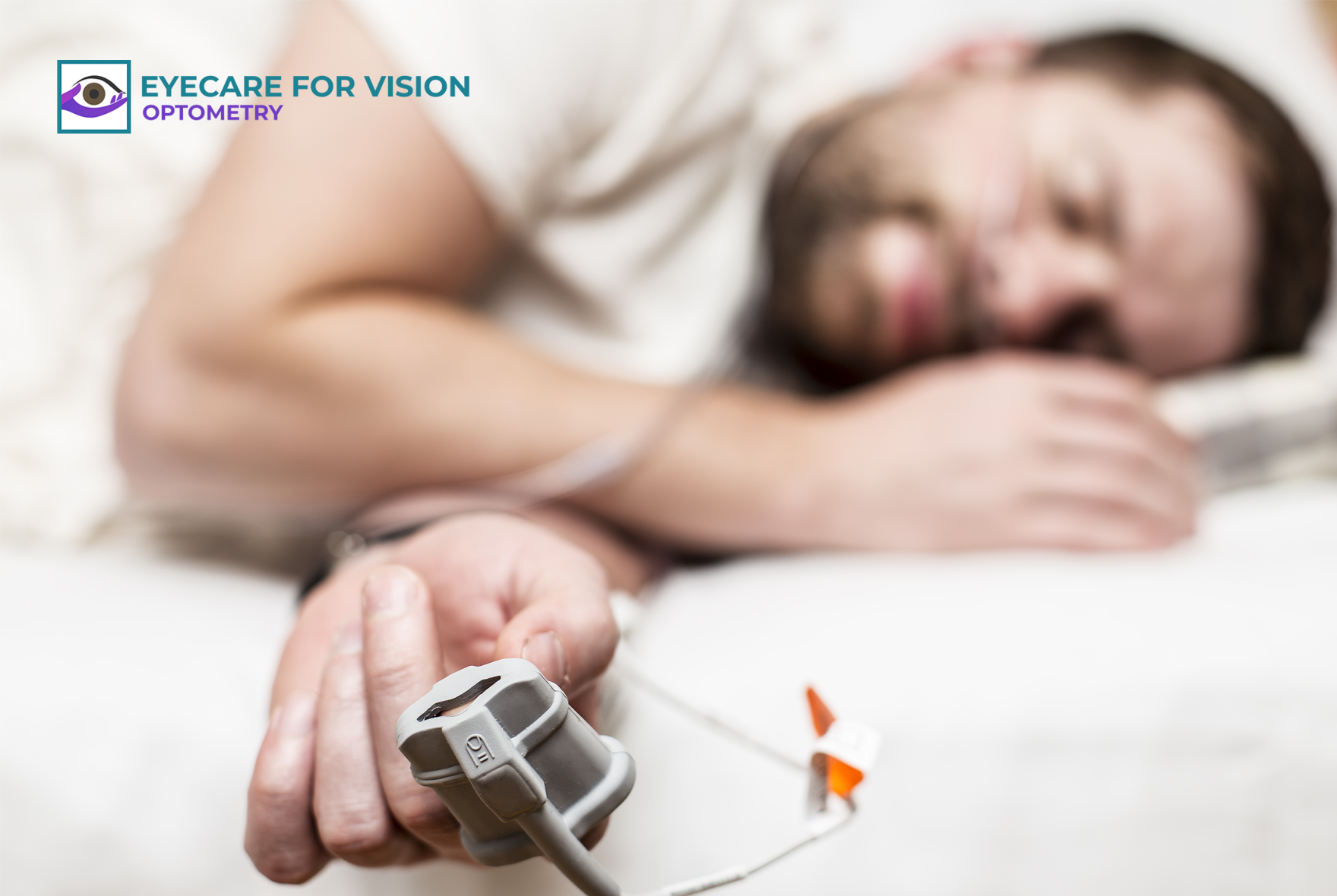
How Does Sleep Apnea Affect the Eyes?
TLDR
Sleep apnea can significantly impact eye health and vision.
Conditions such as glaucoma and dry eye syndrome are associated with sleep apnea.
Regular eye exams are essential for early detection and management.
Consult an optometrist for personalized care and treatment.

What Do Yellow Eyes Indicate About Liver or Overall Health?
TLDR
Yellow eyes often indicate jaundice linked to liver issues.
Common causes include hepatitis, liver disease, and bile duct obstruction.
Treatments vary depending on underlying causes.
Healthy lifestyle choices can support liver health.
Seek professional medical evaluation for any yellowing of the eyes.
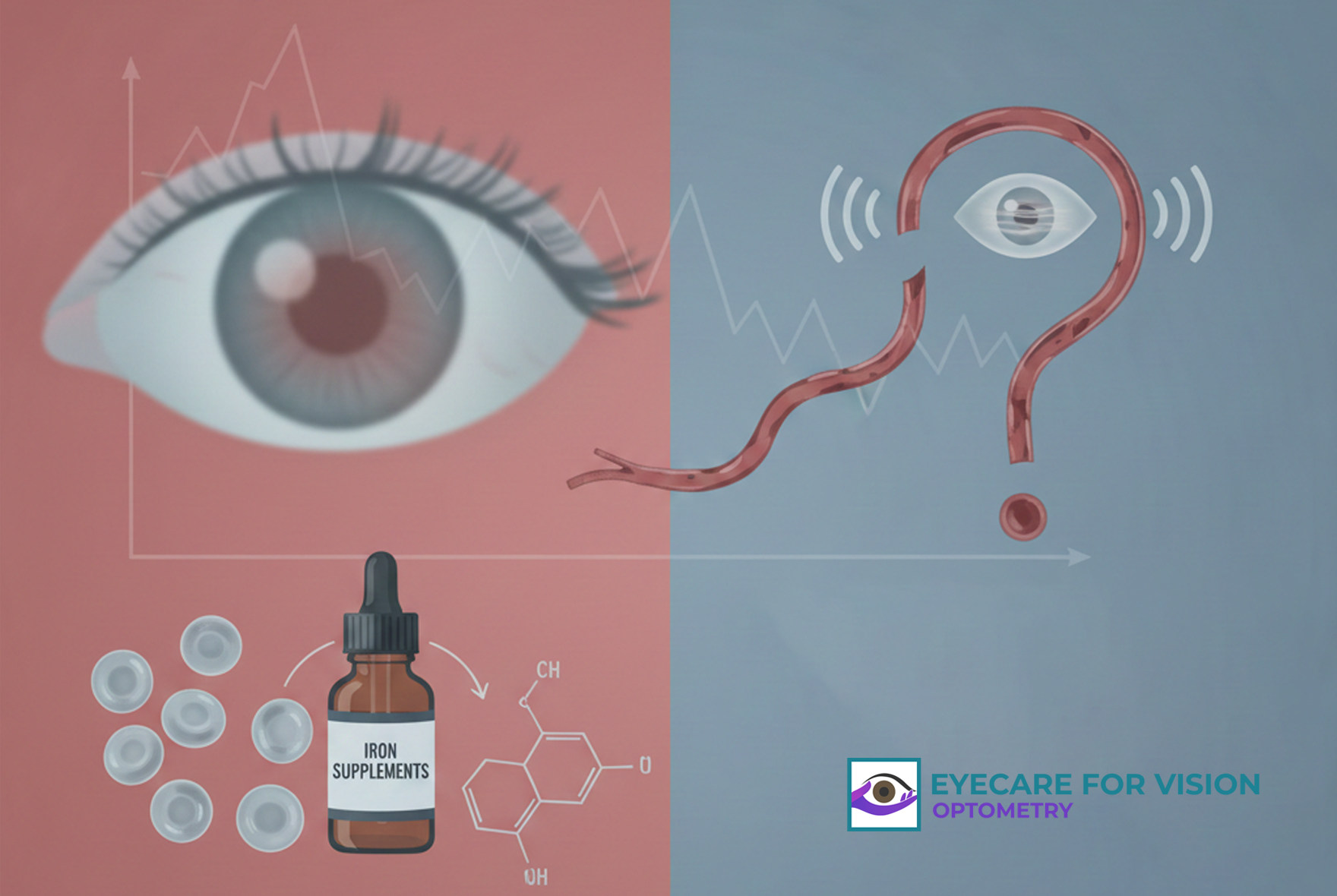
Can Anemia or Low Iron Levels Cause Vision Changes?
TLDR
Anemia can potentially affect vision and eye health.
Symptoms include fatigue, dizziness, and possible changes in vision.
Treatment involves proper diagnosis and addressing underlying causes.
Regular eye exams and a healthy lifestyle help reduce risks.

Can Head Injuries or Concussions Affect Vision Long-Term?
TLDR
Head injuries can impact vision and may lead to long-term symptoms.
Common symptoms include blurred vision, double vision, and light sensitivity.
Professional treatment helps manage symptoms and prevent complications.
Early consultation with a healthcare provider is essential for proper management.

What Causes Temporary Vision Loss or Vision Dimming and How Can It Be Treated?
TLDR
Temporary vision loss can be caused by many factors, including migraines and eye strain.
Symptoms include sudden dimming, blurriness, or partial vision loss.
Management involves addressing underlying causes; consult a healthcare provider.
Prevention includes maintaining eye health through regular check-ups and lifestyle habits.

Can Eye Exams Reveal Signs of a Brain Tumor or Stroke?
TLDR
Eye exams can detect signs of brain tumors or strokes early.
Optometrists look for changes in the optic nerve and vision.
Regular eye exams are essential for early intervention.
Consult a healthcare provider if you experience unusual symptoms.

What Can Frequent Headaches Reveal About My Vision?
TLDR
Frequent headaches can be linked to various vision problems.
Potential causes include refractive errors, digital eye strain, and more serious conditions like glaucoma.
Consult a healthcare provider for a comprehensive eye exam.
Treatment options vary from corrective lenses to surgery, depending on the condition.
Prevention includes regular eye exams and ergonomic adjustments.
Recent studies show a correlation between digital device use and increased eye strain.

Are Regular Eye Exams Important Even After Cataract or LASIK Surgery?
TLDR
Regular eye exams remain crucial post-surgery.
Cataract and LASIK surgery don't prevent future eye issues.
Exams help detect conditions like glaucoma and diabetic retinopathy.
Post-surgery, visual changes can occur and need monitoring.
Consult your healthcare provider for personalized advice.

How Does Dehydration Affect the Eyes and Vision?
TLDR
Dehydration can lead to dry eyes, blurred vision, and eye strain.
Essential to maintain proper hydration for eye health.
Consult your healthcare provider for persistent symptoms.
Treatment includes artificial tears and lifestyle changes.
Prevention tips focus on adequate fluid intake and eye care.
Recent studies show a link between dehydration and vision issues.

Can Eye Exams Help Detect Stroke Risk or Vascular Problems?
TLDR
Eye exams can reveal signs of stroke risk and vascular problems.
Conditions like hypertension, retinal artery occlusion, and diabetic retinopathy may be detected during an eye exam.
Comprehensive Eye Exams in Rancho Bernardo can aid in early detection and prevention.
Treatments vary from lifestyle changes to medical interventions.
Consult your healthcare provider if you notice vision changes or other concerning symptoms.

How Can Seniors Protect Their Eyes from Falls and Accidents?
TLDR
Seniors face increased risks of eye-related falls and accidents.
Regular Comprehensive Eye Exams in Rancho Bernardo are essential.
Implement home safety measures to minimize fall risks.
Stay informed about the latest treatments for vision-related conditions.
Schedule visits with an affordable optometrist near Rancho Bernardo for personalized care.

What Role Does UV Protection Play in Preventing Cataracts and Macular Degeneration?
TLDR
UV radiation contributes to cataracts and macular degeneration.
Sunglasses with 100% UV protection are essential for prevention.
Cataracts cloud the eye's lens, leading to vision impairment.
Macular degeneration affects central vision and daily activities.
Regular eye exams are vital for early detection and management.
Consult your healthcare provider for personalized advice and preventive care.

Why Does My Close-Up Vision Get Worse as I Get Older?
TLDR
Aging affects close-up vision due to presbyopia, a natural condition where the eye's lens stiffens.
Symptoms include difficulty focusing on close objects, eye strain, and headaches.
Treatment options include reading glasses, bifocals, and contact lenses, each with pros and cons.
Prevention includes regular eye exams and eye health maintenance.
Consult your healthcare provider if you notice changes in vision.

Can Too Much Screen Time Worsen My Child’s Nearsightedness?
TLDR
Excessive screen time may contribute to worsening nearsightedness (myopia) in children.
Symptoms include frequent squinting, headaches, and eye strain.
Treatments range from corrective glasses to specialized myopia management.
Prevention tips include regular eye exams and limiting screen time.
Consult a healthcare provider to tailor strategies for your child's eye health.

Are Regular School Vision Screenings Enough to Catch Eye Problems in Kids?
TLDR
School vision screenings are basic checks and not comprehensive.
They may miss conditions like amblyopia, strabismus, and astigmatism.
Comprehensive eye exams are more thorough, assessing overall eye health.
Early detection and treatment can prevent long-term vision issues.
Consult your healthcare provider for personalized advice.