
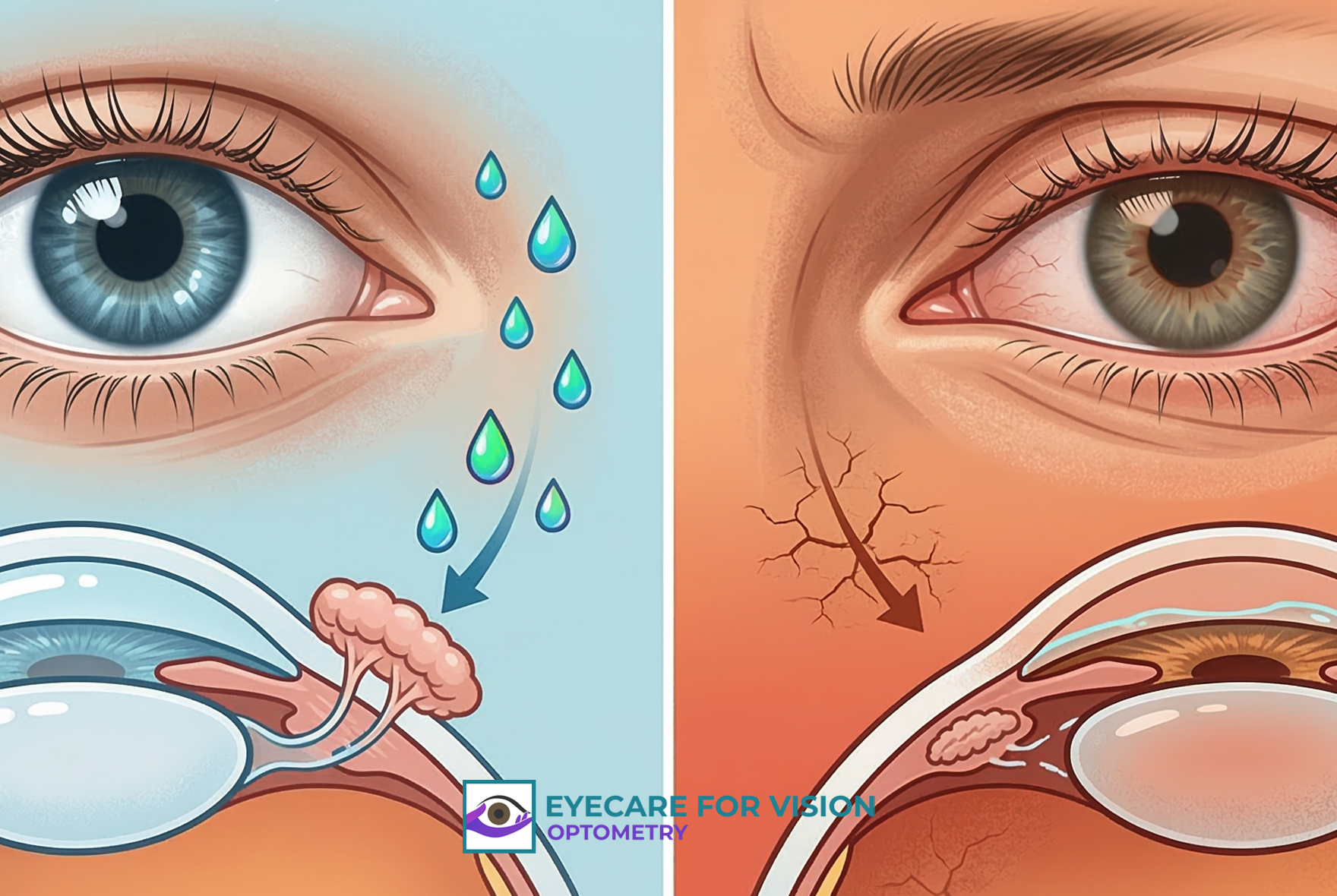
How Does Dehydration Impact Tear Production and Eye Comfort?
TLDR
• Dehydration can reduce tear production, leading to dry eyes.
• Dry eyes cause discomfort and increase the risk of eye infections.
• Stay hydrated and consider artificial tears for relief.
• See an optometrist for persistent dryness and irritation.

Why Do Some Medications Cause Dry Eyes or Blurred Vision?
TLDR
Some medications can contribute to dry eyes and blurred vision.
Dry eyes may cause discomfort and irritation.
Blurred vision can interfere with daily activities.
Professional evaluation helps identify causes and solutions.

Can Autoimmune Diseases Like Lupus or Rheumatoid Arthritis Damage Vision?
TLDR
Autoimmune diseases can affect eye health and vision.
Common symptoms include dry eyes, pain, and blurred vision.
Management requires personalized care and regular eye exams.
Early detection is crucial to prevent long-term vision damage.

What Do Yellow Eyes Indicate About Liver or Overall Health?
TLDR
Yellow eyes often indicate jaundice linked to liver issues.
Common causes include hepatitis, liver disease, and bile duct obstruction.
Treatments vary depending on underlying causes.
Healthy lifestyle choices can support liver health.
Seek professional medical evaluation for any yellowing of the eyes.

Can Head Injuries or Concussions Affect Vision Long-Term?
TLDR
Head injuries can impact vision and may lead to long-term symptoms.
Common symptoms include blurred vision, double vision, and light sensitivity.
Professional treatment helps manage symptoms and prevent complications.
Early consultation with a healthcare provider is essential for proper management.

What is optic neuritis, and how is it connected to neurological conditions?
TLDR
Optic neuritis is inflammation of the optic nerve affecting vision.
It can be linked to neurological conditions such as multiple sclerosis.
Symptoms include vision loss, pain, and color vision changes.
Early diagnosis and treatment are key to managing symptoms and underlying causes.
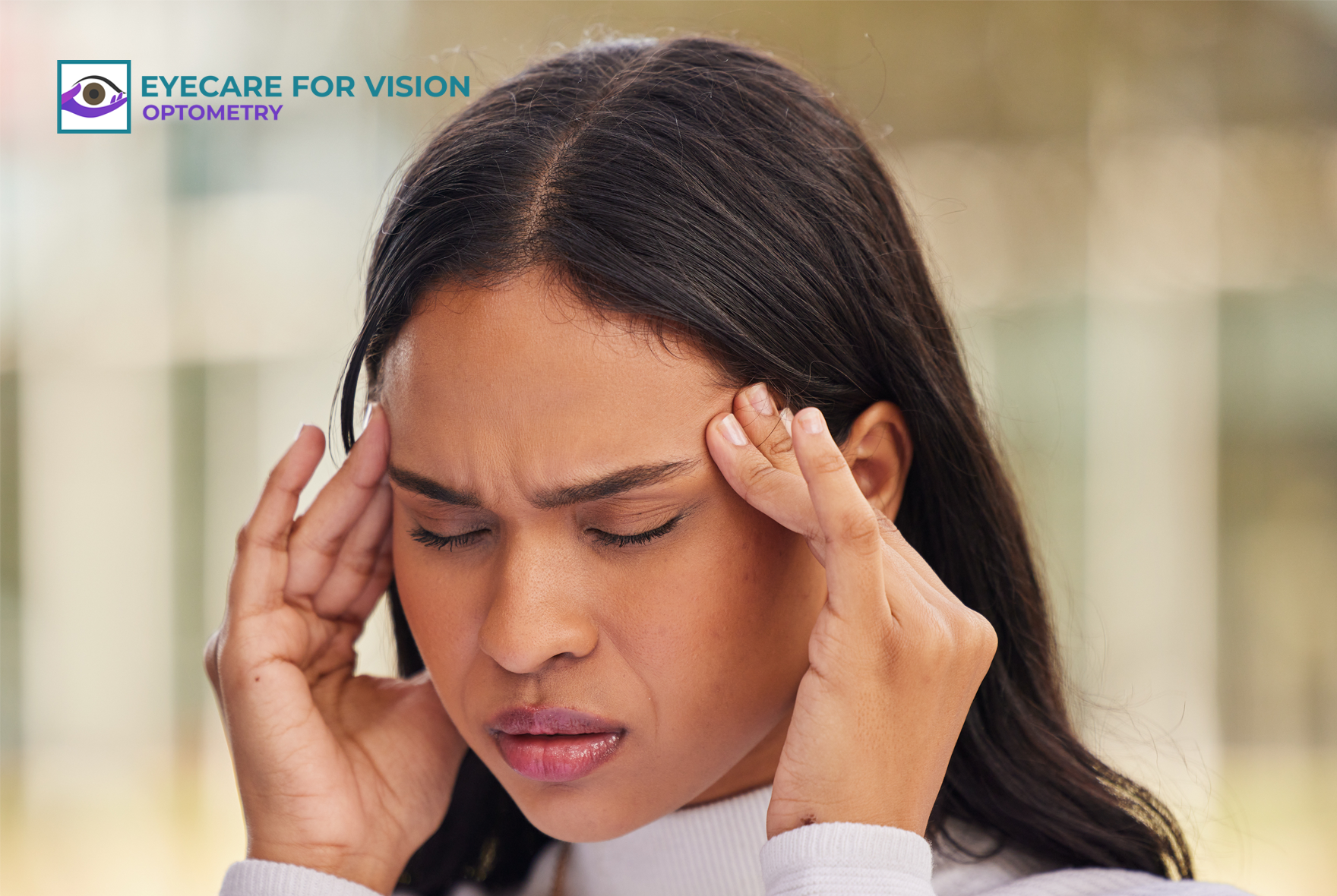
How Are Migraines Connected to Visual Disturbances or Aura?
TLDR
Migraines can cause visual disturbances known as auras.
Auras often appear as zigzag patterns or flashing lights.
Managing triggers and lifestyle changes can reduce migraine frequency.
Seek professional help if migraines disrupt daily life.

Can Eye Exams Reveal Signs of a Brain Tumor or Stroke?
TLDR
Eye exams can detect signs of brain tumors or strokes early.
Optometrists look for changes in the optic nerve and vision.
Regular eye exams are essential for early intervention.
Consult a healthcare provider if you experience unusual symptoms.

Can Hormonal Changes (Like Menopause) Affect My Eyes?
TLDR
Hormonal changes during menopause can significantly impact eye health.
Common symptoms include dry eyes, blurry vision, and increased risk of glaucoma.
Treatments vary from artificial tears to prescription medications.
Regular eye exams and lifestyle adjustments can help manage symptoms.
Recent studies highlight increasing prevalence of eye issues in menopausal women.
Consult your healthcare provider for personalized advice and treatment.

What Can Frequent Headaches Reveal About My Vision?
TLDR
Frequent headaches can be linked to various vision problems.
Potential causes include refractive errors, digital eye strain, and more serious conditions like glaucoma.
Consult a healthcare provider for a comprehensive eye exam.
Treatment options vary from corrective lenses to surgery, depending on the condition.
Prevention includes regular eye exams and ergonomic adjustments.
Recent studies show a correlation between digital device use and increased eye strain.

Are Regular Eye Exams Important Even After Cataract or LASIK Surgery?
TLDR
Regular eye exams remain crucial post-surgery.
Cataract and LASIK surgery don't prevent future eye issues.
Exams help detect conditions like glaucoma and diabetic retinopathy.
Post-surgery, visual changes can occur and need monitoring.
Consult your healthcare provider for personalized advice.

Can Eye Exams Help Detect Stroke Risk or Vascular Problems?
TLDR
Eye exams can reveal signs of stroke risk and vascular problems.
Conditions like hypertension, retinal artery occlusion, and diabetic retinopathy may be detected during an eye exam.
Comprehensive Eye Exams in Rancho Bernardo can aid in early detection and prevention.
Treatments vary from lifestyle changes to medical interventions.
Consult your healthcare provider if you notice vision changes or other concerning symptoms.

What Role Does UV Protection Play in Preventing Cataracts and Macular Degeneration?
TLDR
UV radiation contributes to cataracts and macular degeneration.
Sunglasses with 100% UV protection are essential for prevention.
Cataracts cloud the eye's lens, leading to vision impairment.
Macular degeneration affects central vision and daily activities.
Regular eye exams are vital for early detection and management.
Consult your healthcare provider for personalized advice and preventive care.

What Are the Early Signs of Lazy Eye (Amblyopia) Parents Should Watch For?
TLDR
Lazy eye (amblyopia) manifests as poor vision in one eye that doesn’t improve with glasses or contact lenses.
Symptoms include noticeable eye turn, poor depth perception, and squinting.
Early detection through comprehensive eye exams is crucial.
Treatment options vary from corrective eyewear to surgery.
Consult your healthcare provider if you notice symptoms.
Routine eye care and early intervention can prevent and manage amblyopia.

Can Too Much Screen Time Worsen My Child’s Nearsightedness?
TLDR
Excessive screen time may contribute to worsening nearsightedness (myopia) in children.
Symptoms include frequent squinting, headaches, and eye strain.
Treatments range from corrective glasses to specialized myopia management.
Prevention tips include regular eye exams and limiting screen time.
Consult a healthcare provider to tailor strategies for your child's eye health.

How Can I Tell If My Child Has Trouble Seeing If They Don’t Complain?
TLDR
Children may not always express vision problems.
Look for signs like squinting, sitting too close to screens, or frequent headaches.
Regular comprehensive eye exams are crucial.
Treatment options include glasses, contact lenses, or vision therapy.
Consult your healthcare provider for personalized advice.
Prevention tips include limiting screen time and ensuring proper lighting.
Schedule regular eye check-ups with a trusted optometrist.

How Does Smoking or Vaping Impact Eye Health?
TLDR
Smoking and vaping can significantly harm eye health.
Common eye conditions linked to smoking include cataracts and age-related macular degeneration (AMD).
Vaping exposes eyes to harmful chemicals, potentially increasing the risk of dry eye syndrome and other conditions.
Prevention includes quitting smoking and regular eye exams.
Consult your healthcare provider for personalized advice.

How Does Blue Light From Phones and Computers Affect the Eyes?
TLDR
Blue light is emitted by digital screens and can lead to digital eye strain.
Symptoms include eye discomfort, headaches, and sleep disturbances.
Preventive measures include screen time management and blue light filters.
Consult a provider for personalized advice and potential treatments.
Regular eye exams are crucial for maintaining eye health.

Can LASIK or Refractive Surgery Completely Eliminate the Need for Glasses?
TLDR
LASIK and refractive surgeries can significantly reduce dependency on glasses.
Not everyone is a suitable candidate; comprehensive eye exams are crucial.
Some may still need reading glasses or glasses for certain tasks.
Risks include dry eyes, glare, and potential complications.
Consultation with a trusted optometrist in Rancho Bernardo is essential.

Can Long-term Use of Certain Medications Affect My Vision?
TLDR
Long-term use of some medications can adversely impact vision.
Common symptoms include blurred vision, dry eyes, and increased pressure in the eyes.
Treatments vary; discuss options with your healthcare provider.
Recent studies indicate some medications are linked to specific eye conditions.
Lifestyle adjustments may help mitigate risks.
Consult an eye care professional if you experience visual changes.